Accessory Dwelling Units (ADUs) in Phoenix – A Quick Reference Guide
If you’ve been thinking about adding more living space, boosting rental income, or creating a
private spot for family members, an Accessory Dwelling Unit (ADU) could be your answer.
Phoenix has recently expanded what’s possible for homeowners, and the opportunities are better
than ever. Whether you call it a casita, guest house, or granny flat, here’s everything you need to
know about building an ADU in Phoenix.
What is an ADU?
An Accessory Dwelling Unit is a secondary living space that’s part of the same property as a
main single-family home. It’s fully independent, meaning it has its own kitchen, bathroom, and
sleeping area. ADUs can be created by converting part of your existing home, adding a new
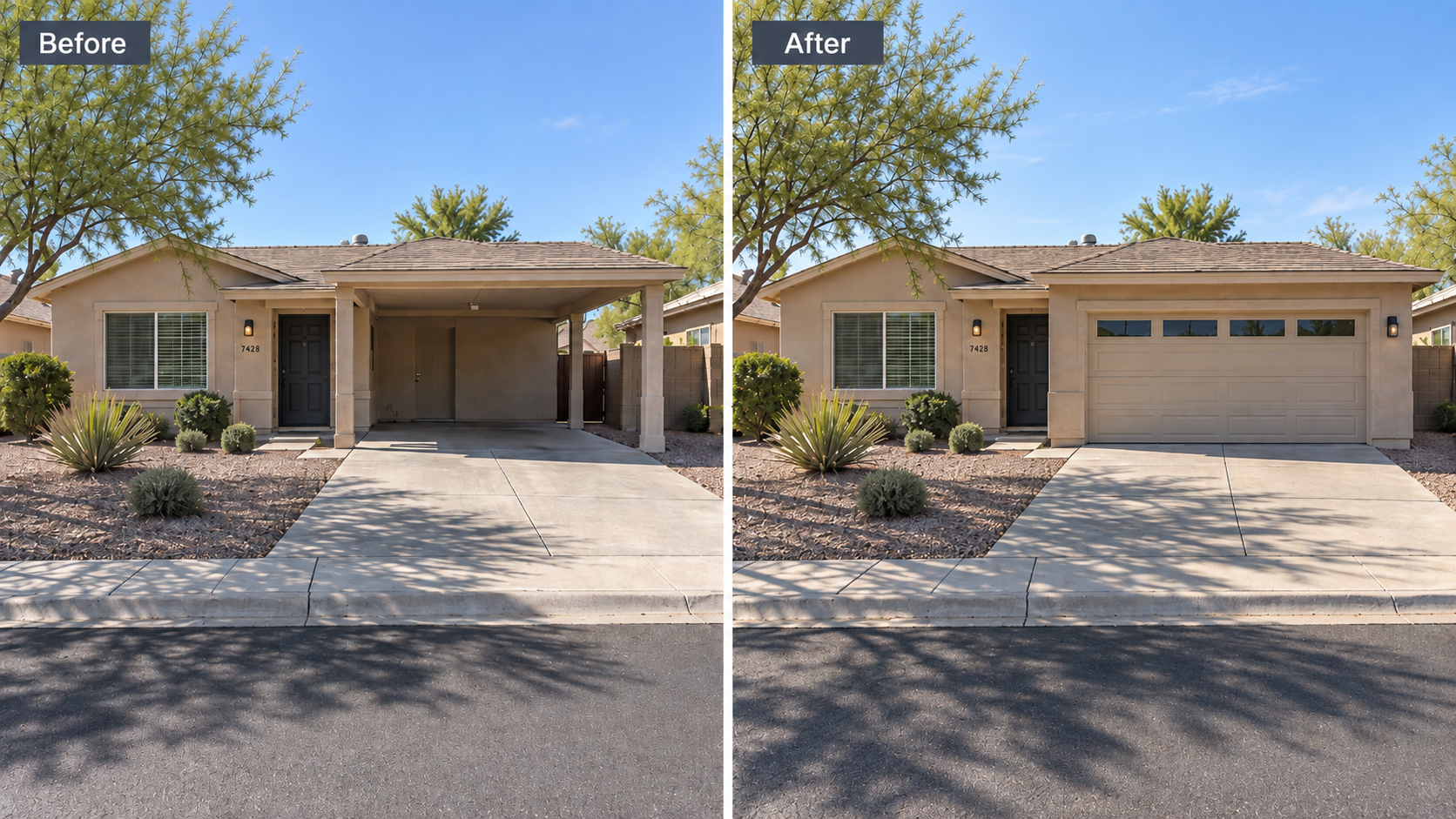
extension, turning a garage into living space, or building a new detached structure.
Who Can Build an ADU in Phoenix?
Phoenix allows most single-family detached lots to have up to two ADUs. There’s even an option
for three ADUs on properties that are at least one acre in size and have one unit designated as
Affordable Housing. If your property is a duplex or triplex, you cannot build an ADU. ADUs can
also be rented on platforms like Airbnb under Arizona Revised Statutes. However, if you’re
converting a garage or carport into an ADU, you must create new off-street parking somewhere
else on the property, and not in the front setback.Key Development Rules
Phoenix has strict guidelines for ADU size, height, and placement. The height limit for attached
or detached units is 15 feet unless you get a use permit. Setbacks for detached ADUs require at
least 5 feet from a street side property line, 3 feet from an interior side, and they can be built
right up to the property line if next to an alley. Attached ADUs can extend into the rear yard but
must be at least 3 feet from the rear line and 5 feet from the side. For size, lots 10,000 square feet
or smaller are limited to 1,000 square feet or 75% of the main home’s floor area, whichever is
less. Lots over 10,000 square feet are limited to 3,000 square feet, 10% of the lot size, or 75% of
the main home’s floor area, whichever is less.
How to Get an ADU Permit
To build an ADU, first check your zoning district to confirm eligibility. Next, calculate lot
coverage by adding the square footage of your main home, garage, patios, and other structures. If
any existing buildings are unpermitted, they must be legalized before moving forward. Once
that’s complete, you will need to have the architectural and working drawings created. submit
your building plans for review to ensure they comply with city regulations.
Is Building an ADU Worth It?
ADUs can be a smart investment, but there’s homework involved. Smaller builds often cost more
per square foot than larger homes, and your return on investment (ROI) depends heavily on local
rental demand. The best returns are typically found in high-demand neighborhoods with strong
long-term and short-term rental markets. Compare estimated rental income with your
construction costs before you start to make sure the numbers work in your favor.
Final Thoughts
Phoenix’s updated ADU rules make it easier than ever for homeowners to add living space and
generate income. Whether you want a private spot for family, a rental unit for extra income, or
both, knowing the regulations upfront will save you time, money, and frustration. If you’re
serious about moving forward, start by checking your zoning and lot coverage, then run the
numbers to make sure it’s a good financial move.