
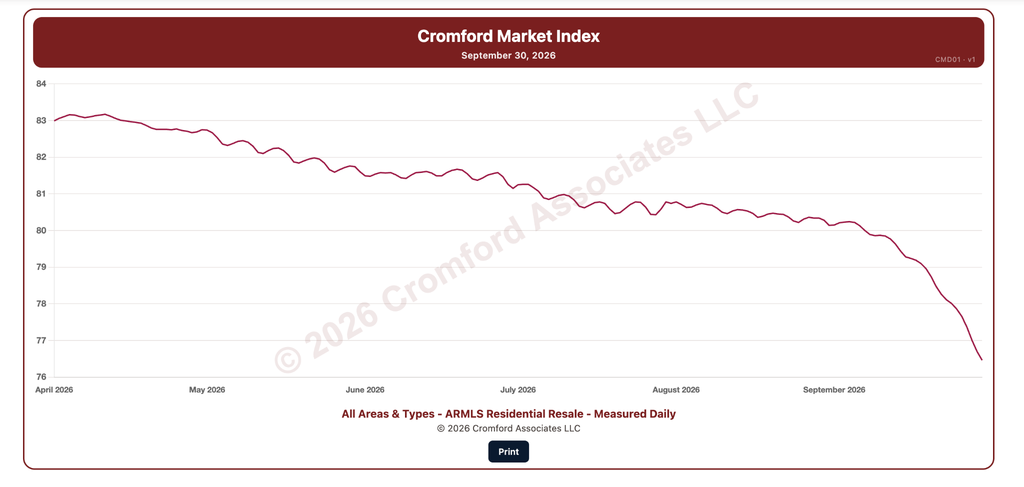
The Metro Phoenix housing market changed quickly in September 2026.
Higher mortgage rates, rising inventory, and weaker buyer demand pushed the market further toward buyers. This does not mean the Phoenix real estate market is collapsing. It does mean sellers have less room for error than they did earlier this year.
For homeowners thinking about selling, the message is fairly simple: buyers have more choices, they are negotiating harder, and homes that need obvious repairs or updating are easier to skip.
The Phoenix Housing Market Weakened Sharply in September
The Cromford Market Index, one of the most closely watched measures of housing supply and demand in Greater Phoenix, had an unusually difficult September.
During the 30 days ending September 29, the index declined in 17 of the 18 major Valley cities. The average city lost about 10.5% of its reading.
Paradise Valley fell 29%, Fountain Hills dropped 27%, and Tempe declined 20%. Scottsdale was the only major city to improve, and the increase was very small.
For the overall market, the Cromford Market Index fell to approximately 76.6, putting Greater Phoenix solidly on the buyer-favored side of the market.
The bigger concern is the direction. Housing supply is increasing at the same time buyer demand is weakening.
Source: Cromford Associates LLC. The chart shows the Greater Phoenix Cromford Market Index falling sharply during September 2026.
Phoenix Has More Homes Competing for Buyers
Greater Phoenix had approximately 23,095 active and coming-soon listings on October 1, compared with 21,087 near the beginning of the chart period a year earlier.
Inventory also increased approximately 7% during September alone.
More homes for sale are not automatically bad news. A healthy market needs inventory. The problem for sellers is that inventory is rising while buyer activity is slowing.
That creates competition.
A buyer who once had only a few reasonable homes to choose from may now have several. When that happens, condition, pricing, presentation and needed repairs become much more important.
A damaged roof, old paint, worn flooring, drywall damage, outdated fixtures or an unfinished project may be enough to send a buyer to another property.
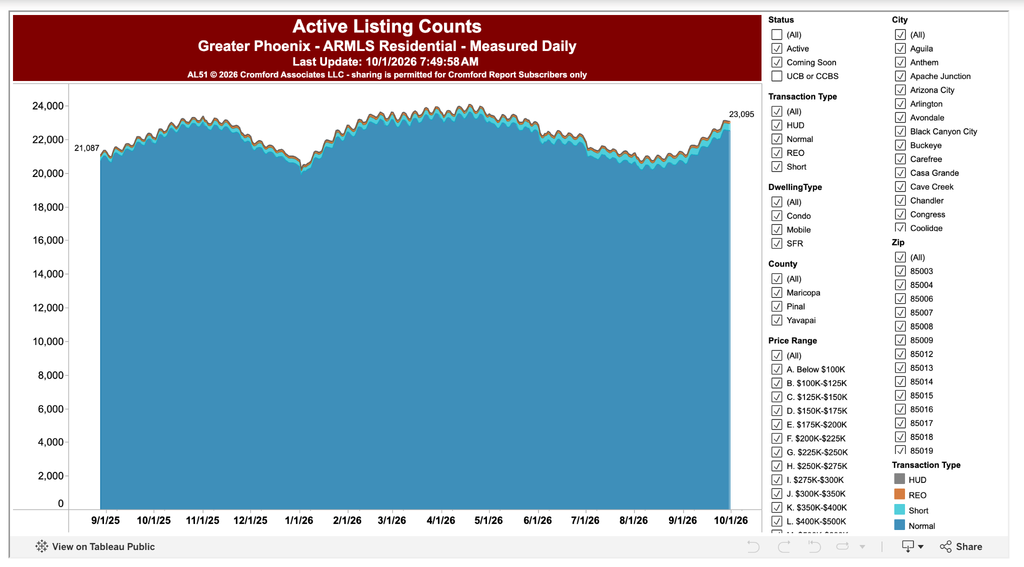
Source: Cromford Associates LLC / ARMLS. Active and coming-soon inventory reached approximately 23,095 listings on October 1, 2026.
Contract Activity Confirms a Cooler Market
The Greater Phoenix contract ratio tells a similar story.
The contract ratio compares the number of listings under contract with the number available for sale. A higher number means buyers are absorbing inventory quickly. A lower number means sellers are competing harder for the available buyers.
The chart shows how dramatically conditions have changed from the much stronger market of 2023. Contract activity improved during portions of early 2026, but weakened again heading into late summer and September.
This type of market typically means:
- Longer time on market
- More price reductions
- More seller concessions
- Greater scrutiny during inspections
- More negotiation over repairs
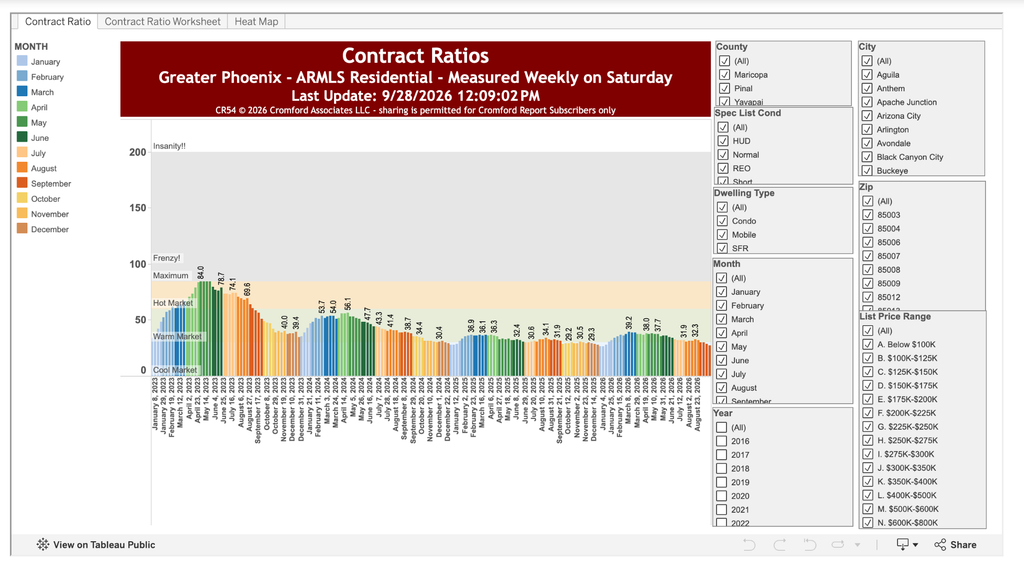
Source: Cromford Associates LLC / ARMLS. Greater Phoenix contract ratios remain far below the levels reached during stronger recent markets.
Mortgage Rates Are a Major Reason Buyers Are Pulling Back
Affordability remains one of the biggest problems facing the housing market.
Freddie Mac’s national 30-year fixed mortgage average was 7.28% on October 1, 2026.
That matters because even a small change in the mortgage rate can make a large difference in a buyer’s monthly payment.
At rates above 7%, buyers become much more price-sensitive. Many households that can technically afford a home may decide that the monthly payment is simply too high.
As a result, some buyers are waiting for one of three things:
Lower mortgage rates, lower home prices, or larger seller concessions.
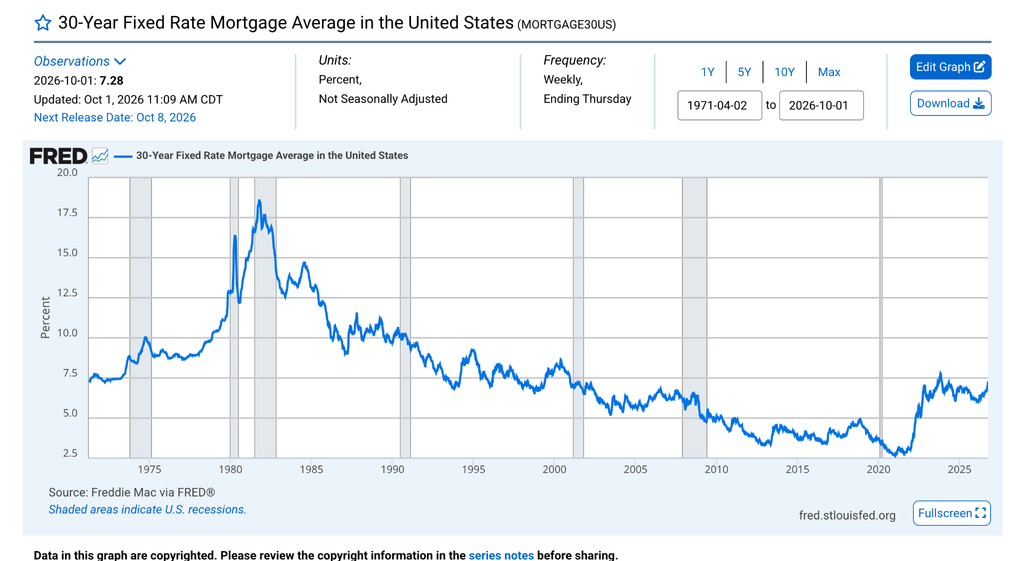
Source: Freddie Mac via Federal Reserve Bank of St. Louis. The 30-year fixed mortgage average was 7.28% on October 1, 2026.
This Is Not Just a Phoenix Problem
The slowdown is also visible nationally.
Existing-home sales and pending-home sales remain well below the levels reached before the major housing slowdown that began in 2022.
The chart below shows that national sales activity has essentially moved sideways at relatively low levels for several years.
That helps explain an unusual housing environment: millions of people still want homes, but high financing costs are preventing many of them from becoming active buyers.
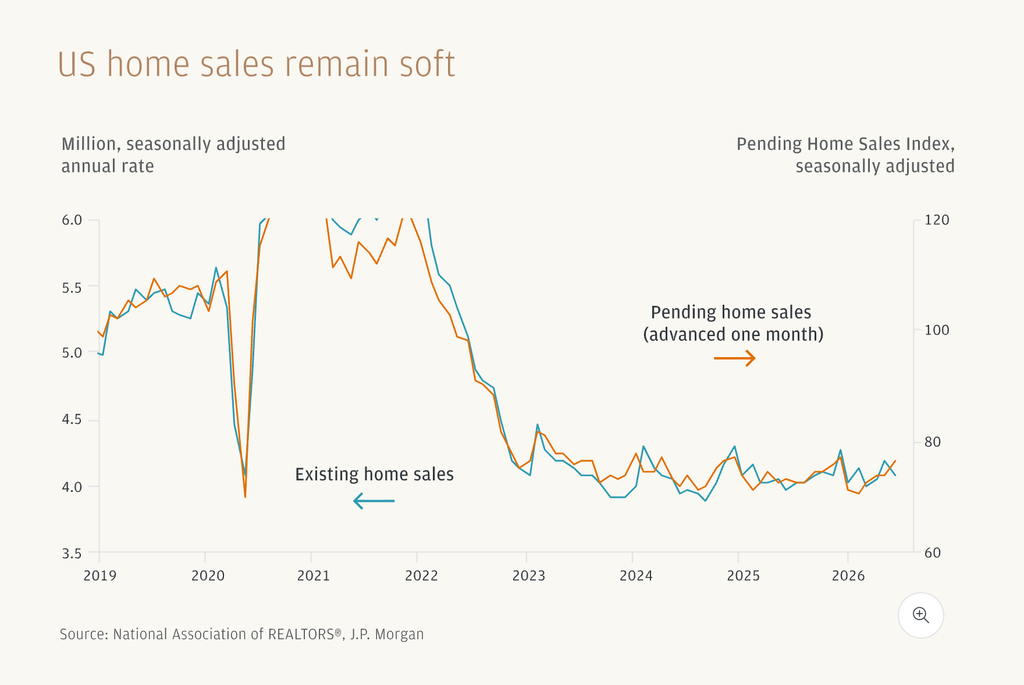
Source: National Association of REALTORS® and J.P. Morgan. U.S. existing and pending home sales remain historically soft.
Phoenix Home Sales Remain Well Below Earlier Levels
Greater Phoenix has followed the same general pattern.
The latest annual sales-rate chart provided, updated in August, showed an annual pace of about 71,000 residential sales.
That is an improvement from the weakest periods of 2024 and 2025, but it remains far below the roughly 90,000 to 105,000 annual pace seen during much of the stronger 2017-2022 period.
In other words, the Phoenix housing market is still functioning. There are simply fewer transactions competing for a larger number of listings.
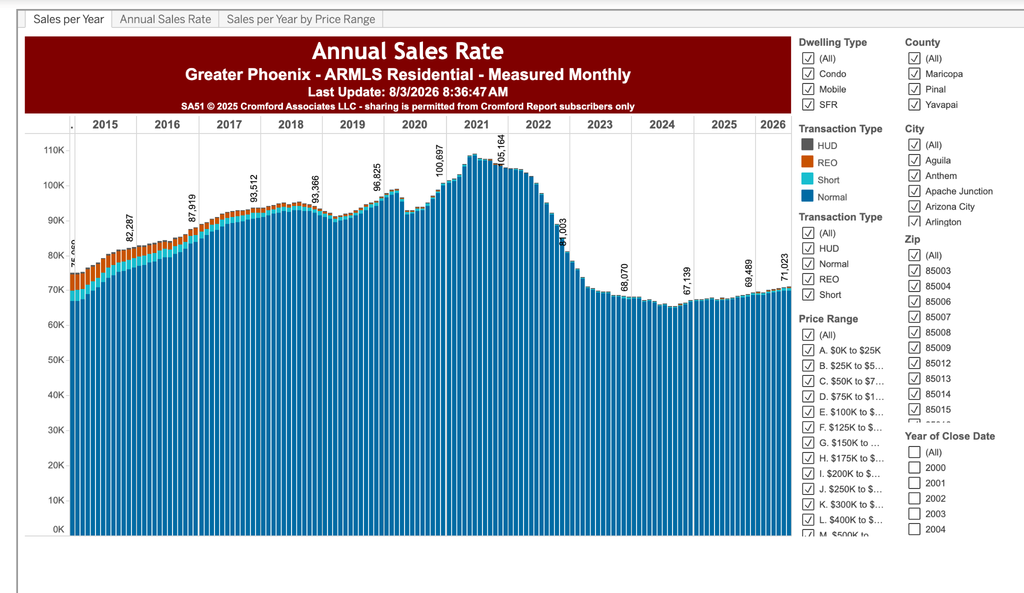
Source: Cromford Associates LLC / ARMLS. Greater Phoenix annual transaction volume remains well below the levels seen before the 2022 slowdown.
What This Means for Phoenix Home Sellers
In a strong seller’s market, buyers may overlook problems because they are afraid someone else will buy the home.
In a buyer’s market, the psychology reverses.
Buyers start asking:
What will I have to repair after closing? Is another home already updated? Can I negotiate the price? Will the seller contribute toward closing costs or a mortgage-rate buydown?
That makes pre-listing repairs and home preparation increasingly important.
The answer is not necessarily a complete remodel.
For many Phoenix homes, targeted improvements may make more financial sense. Roof repairs, drywall and paint work, flooring replacement, electrical corrections, plumbing repairs, cabinet improvements, exterior cleanup and completing unfinished work can remove objections before buyers ever walk through the door.
Fix the Problems Buyers Will Notice
Sellers should be careful about spending money simply because an improvement looks attractive.
A better question is:
Will this repair eliminate a reason for the buyer to reject the home or demand a large discount?
A $5,000 repair does not automatically increase a home’s value by $5,000.
But an unresolved problem may cause a buyer to assume it will cost $10,000 or $15,000—or decide they would rather buy the house down the street that does not have the problem.
That is why the most effective pre-listing home improvements often focus first on visible defects, deferred maintenance, water damage, worn finishes, safety issues and unfinished construction.
Luxury Markets Are Stronger, But They Are Not Immune
Scottsdale, Paradise Valley, Fountain Hills, Chandler and Cave Creek remain stronger than many other Metro Phoenix communities.
However, Paradise Valley and Fountain Hills also experienced two of the largest September declines in the Cromford Market Index.
Luxury buyers generally have greater financial flexibility, but they also have high expectations.
When several luxury homes are available, a property with dated finishes, visible repairs or incomplete work may look significantly weaker next to a competing home that is clean, repaired and move-in ready.
Bottom Line for the Phoenix Housing Market
The Phoenix housing market is moving further toward buyers heading into fall 2026.
Inventory is rising. Buyer demand is weakening. Mortgage rates remain above 7%. Contract activity is soft, and transaction volume remains well below the stronger years before 2022.
That does not mean homeowners cannot sell successfully.
It means the strategy has changed.
Pricing needs to be realistic. Repairs should be evaluated before the property goes on the market. And sellers need to recognize that buyers now have enough choices to walk away from homes that appear overpriced or require too much work.
For Metro Phoenix homeowners preparing to sell, coordinating the real estate strategy and necessary construction work before listing can help prevent repair issues from becoming negotiating leverage for the buyer.